Tuesday, October 31, 2006


Saturday, October 28, 2006
The Rocks beneath my Feet - Part 1
The Jurassic Coast is a living record of the last 250 million years, which encompasses the Mesozoic Era. The Mesozoic Era includes the Triassic, Jurassic and Creatious periods
The triassic Period of around 200 - 250 million years ago
In Triassic times, the Jurassic Coast was part of a super-continent called Pangaea. This landmass divided to form the continents of the modern world. The Jurassic Coast lay within the arid centre of the super-continent and hot desert conditions prevailed. A huge mountain chain lay to the west. The mountains gradually eroded and thier roots remain in Dartmoor, England and Brittany, France. Rivers flowed north and east, depositing pebbles and sand across southern England. The rivers spilled into the desert, creating vast lakes that were subject to evaporation
The Triassic rocks on the Jurassic Coast are red because deserts contain very little organic material, and, in its absence, iron forms red oxides. In the modern world the Namib Desert in Africa has the sort of conditions that the eastern part of the jurassic Coast would have known during the Triassic period
The Triasic period was a critical period of evolution. The Earth had been decimated by a large mass extinction event at the end of the previous period. The surviving groups of animals evolved and diversified. The first donosaurs evolved and went on to dominate life through the entire Mesozoic era
Most of the groups of four legged animals that we see today had arrived by the end of the Triassic period, including frogs, turtles, crocodiles and mammals
The Jurassic period of around 140 - 200 million years ago
Pangaea started to break apart during the Jurassic era. The Atlantic Ocean opened to the West of Britain and the Americas drifted away from Europe.
The Earth was relatively warm with high sea levels and hardly any polar ice caps. The rocks of the Jurassic Coast recorded the marine conditions during the Jurassic period, conditions that fluctuated from relatively deep seas to coastal swamps
Sea levels rose and fell in a series of cycles, depositing deep water clays, sandstones and finally shallow water limestones. The sea was shallower in the Middle Jurassic, creating an environment of islands surrounded by shallow shoals, similar to the Caribbean of today. Sea levels then deepened and finally shallowed towards the end of the Jurassic, creating the conditions for a forest to flourish in a tropical swamp environment
The expansion of shallow seas encouraged an explosion of life in the Jurassic period, with many species evolving rapidly in order to take advantage of the new habitats. Dinosaurs walked the earth and the dominant carnivores in the seas included plesiosaurs and crocodiles. This information is drawn from the evidence of fossils found on the Jurassic Coast, along with the numerous fossilised ammonites (related to the modern-day squid) that lived during this period
The Cretatious period of around 65 - 140 million years ago
During the Cretatious period, America continied to drift away from Europe and the Atlantic developed into a recogniseable ocean. In the early part of the Cretatious era the Jurassic Coast would have been similar to the modern day Gulf of Arabia with lagoons covered by salt flats. Conditions would have become more hospitable, with lush swamps inhabited by dinosaurs. Mid-way through the period, movement of the earth deep under the South-West of England tilted the rocks to the East. As the Atlantic Ocean and Mediterranean expanded, a vast sea developed over the area. Within the clear warm waters billions of microscopic algae bloomed, their skeletons sank to the sea floor to form the pure white chalk that is seen in this area
The cretatious period was when some of the largest and most feared dinosaurs walked the earth. It is also the time when the first flowering plants are thought to have appeared. The end of this period in time is critical to the shape that the modern world would take. A mass extinction took place which heralded the end of the reign of the reptiles as the dominant life on earth. Dinosaurs, marine reptiles and ammonites were among those species that became extinct at this time. The modern world that followed would be dominated by mammals, flowering plants and grasses
Chalk: the youngest of the Cretatious rocks found across the Jurassic Coast
Source: The Official Guide to the Jurassic Coast
The Jurassic Coast is a living record of the last 250 million years, which encompasses the Mesozoic Era. The Mesozoic Era includes the Triassic, Jurassic and Creatious periods
The triassic Period of around 200 - 250 million years ago
In Triassic times, the Jurassic Coast was part of a super-continent called Pangaea. This landmass divided to form the continents of the modern world. The Jurassic Coast lay within the arid centre of the super-continent and hot desert conditions prevailed. A huge mountain chain lay to the west. The mountains gradually eroded and thier roots remain in Dartmoor, England and Brittany, France. Rivers flowed north and east, depositing pebbles and sand across southern England. The rivers spilled into the desert, creating vast lakes that were subject to evaporation
The Triassic rocks on the Jurassic Coast are red because deserts contain very little organic material, and, in its absence, iron forms red oxides. In the modern world the Namib Desert in Africa has the sort of conditions that the eastern part of the jurassic Coast would have known during the Triassic period
The Triasic period was a critical period of evolution. The Earth had been decimated by a large mass extinction event at the end of the previous period. The surviving groups of animals evolved and diversified. The first donosaurs evolved and went on to dominate life through the entire Mesozoic era
Most of the groups of four legged animals that we see today had arrived by the end of the Triassic period, including frogs, turtles, crocodiles and mammals
The Jurassic period of around 140 - 200 million years ago
Pangaea started to break apart during the Jurassic era. The Atlantic Ocean opened to the West of Britain and the Americas drifted away from Europe.
The Earth was relatively warm with high sea levels and hardly any polar ice caps. The rocks of the Jurassic Coast recorded the marine conditions during the Jurassic period, conditions that fluctuated from relatively deep seas to coastal swamps
Sea levels rose and fell in a series of cycles, depositing deep water clays, sandstones and finally shallow water limestones. The sea was shallower in the Middle Jurassic, creating an environment of islands surrounded by shallow shoals, similar to the Caribbean of today. Sea levels then deepened and finally shallowed towards the end of the Jurassic, creating the conditions for a forest to flourish in a tropical swamp environment
The expansion of shallow seas encouraged an explosion of life in the Jurassic period, with many species evolving rapidly in order to take advantage of the new habitats. Dinosaurs walked the earth and the dominant carnivores in the seas included plesiosaurs and crocodiles. This information is drawn from the evidence of fossils found on the Jurassic Coast, along with the numerous fossilised ammonites (related to the modern-day squid) that lived during this period
The Cretatious period of around 65 - 140 million years ago
During the Cretatious period, America continied to drift away from Europe and the Atlantic developed into a recogniseable ocean. In the early part of the Cretatious era the Jurassic Coast would have been similar to the modern day Gulf of Arabia with lagoons covered by salt flats. Conditions would have become more hospitable, with lush swamps inhabited by dinosaurs. Mid-way through the period, movement of the earth deep under the South-West of England tilted the rocks to the East. As the Atlantic Ocean and Mediterranean expanded, a vast sea developed over the area. Within the clear warm waters billions of microscopic algae bloomed, their skeletons sank to the sea floor to form the pure white chalk that is seen in this area
The cretatious period was when some of the largest and most feared dinosaurs walked the earth. It is also the time when the first flowering plants are thought to have appeared. The end of this period in time is critical to the shape that the modern world would take. A mass extinction took place which heralded the end of the reign of the reptiles as the dominant life on earth. Dinosaurs, marine reptiles and ammonites were among those species that became extinct at this time. The modern world that followed would be dominated by mammals, flowering plants and grasses
Chalk: the youngest of the Cretatious rocks found across the Jurassic Coast
Source: The Official Guide to the Jurassic Coast
Friday, October 27, 2006
Fossils
I have wanted an ammonite for many a long day now, and as you can see from this picture, I am now the proud owner of one. However, all is not as it seems ... I bought this one for a few pounds in Lyme Regis. It is a Promicroceras Planicosta and was found at Lower Lias, Lyme Regis ... it is approximately 190 million years old!

Ammonites are an extinct member of the molusc family, possessing an external shell, coiled in a flat spiral and divided into chambers. They appear in the Carboniferous period and mysteriously died at the end of the cretatious era
Geologists are able to use fossils to help them identify rocks of similar age. Rocks which are hundred of miles apart can be recognised as being of the same age due to the fossils that they contain. Ammonites are especially good for the purpose as many evolved and changed rapidly (in geological terms), producing different species with distinctive shell forms. The Jurassic has been divided into a series of zones based on the appearance and disappearance of different ammonites
Source: The Official Guide to the Jurassic Coast
I have wanted an ammonite for many a long day now, and as you can see from this picture, I am now the proud owner of one. However, all is not as it seems ... I bought this one for a few pounds in Lyme Regis. It is a Promicroceras Planicosta and was found at Lower Lias, Lyme Regis ... it is approximately 190 million years old!

Ammonites are an extinct member of the molusc family, possessing an external shell, coiled in a flat spiral and divided into chambers. They appear in the Carboniferous period and mysteriously died at the end of the cretatious era
Geologists are able to use fossils to help them identify rocks of similar age. Rocks which are hundred of miles apart can be recognised as being of the same age due to the fossils that they contain. Ammonites are especially good for the purpose as many evolved and changed rapidly (in geological terms), producing different species with distinctive shell forms. The Jurassic has been divided into a series of zones based on the appearance and disappearance of different ammonites
Source: The Official Guide to the Jurassic Coast
Monday, October 23, 2006
Friday, October 13, 2006
Brownsea Castle

Brownsea Castle is a mid 16th century square blockhouse protected by a moat which was built on Brownsea Island in Poole Harbour. It was renovated during the 19th century as a stunning residence, sadly though, it was badly damaged by fire in 1895. It has however, been rebuilt and is now used exclusively by the John Lewis Partnership
The island is owned by the National Trust and is open during the months of April - September. Many boat trips of Poole harbour leave from Poole quayside. A boat trip is possibly the best way to see Brownsea Island.
Technorati Profile

Brownsea Castle is a mid 16th century square blockhouse protected by a moat which was built on Brownsea Island in Poole Harbour. It was renovated during the 19th century as a stunning residence, sadly though, it was badly damaged by fire in 1895. It has however, been rebuilt and is now used exclusively by the John Lewis Partnership
The island is owned by the National Trust and is open during the months of April - September. Many boat trips of Poole harbour leave from Poole quayside. A boat trip is possibly the best way to see Brownsea Island.
Technorati Profile
Wednesday, October 04, 2006
Lyme Regis
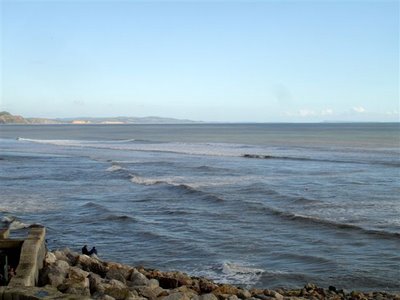
Lyme Regis is notorious for the fossils that are found there. The rocks here are of the Jurassic era, making them in the region of 140 - 200 million years old
Mary Anning (1799 - 18470) lived for her entire life on Lyme Regis and has been described as 'the greatest fossilist who ever lived'. She collected fossils at a time when scientific enquiry was leading to a change in the way people thought about the evolution of life and our planet. A story that would culminate with Charles Darwin's 'On the Origin of Species', published in 1959
Source: The Official Guide to the Jurassic Coast
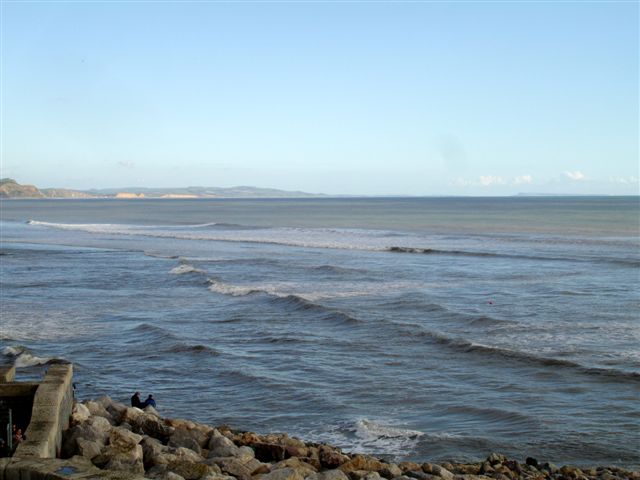
Lyme Regis is notorious for the fossils that are found there. The rocks here are of the Jurassic era, making them in the region of 140 - 200 million years old
Mary Anning (1799 - 18470) lived for her entire life on Lyme Regis and has been described as 'the greatest fossilist who ever lived'. She collected fossils at a time when scientific enquiry was leading to a change in the way people thought about the evolution of life and our planet. A story that would culminate with Charles Darwin's 'On the Origin of Species', published in 1959
Source: The Official Guide to the Jurassic Coast
Saturday, September 30, 2006
Thursday, September 28, 2006
Chessil Beach

Unbelievable as it may seem this picture was taken while standing in the carpark! As you rightly guessed it was a wet day, and I am stood in the carpark located next to the Heritage Centre! Not a lot of visitors to Chessil that day
In the distance you can see the mound of pebbles which is Chessil beach!

Unbelievable as it may seem this picture was taken while standing in the carpark! As you rightly guessed it was a wet day, and I am stood in the carpark located next to the Heritage Centre! Not a lot of visitors to Chessil that day
In the distance you can see the mound of pebbles which is Chessil beach!
Monday, September 25, 2006
Back to Lulworth Stairhole!

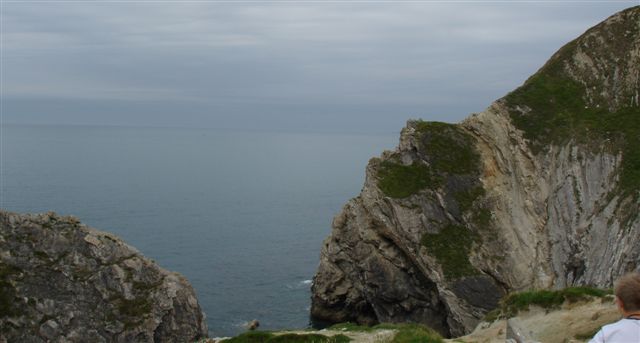
Another picture of the Lulworth Stairhole ... also known as the Lulworth Crumple! What you see is another cove being created next to Lulworth Cove. The breach has been made by collapsinig caves and arches. This has revealed the famous Lulworth Crumple, a complex fold formed by major earth movements that occurred in the same period that the Alps were formed.
[Courtesy of The Official Guide to the Jurassic Coast]
The rocks in this area are from the jurassic and Cretatious era, which are from 65 million to a little over 140 million years ago

Another picture of the Lulworth Stairhole ... also known as the Lulworth Crumple! What you see is another cove being created next to Lulworth Cove. The breach has been made by collapsinig caves and arches. This has revealed the famous Lulworth Crumple, a complex fold formed by major earth movements that occurred in the same period that the Alps were formed.
[Courtesy of The Official Guide to the Jurassic Coast]
The rocks in this area are from the jurassic and Cretatious era, which are from 65 million to a little over 140 million years ago
Tuesday, September 19, 2006
Old Harry's Rock
I visited this rock formation way back in the summer, viewing it from the sea!
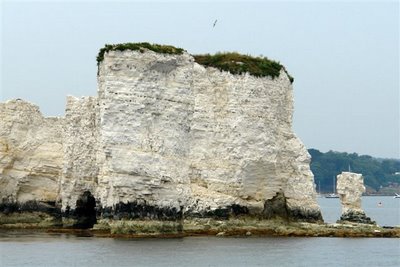
The rocks are caused by the erosion of waves, which attack the weak joints in the rock, forming arches and caves. Eventually they collapse leaving isolated stacks like 'Old harry'.
The rocks in this area are chalk from the Cretatious era of around 65 million years ago
I visited this rock formation way back in the summer, viewing it from the sea!
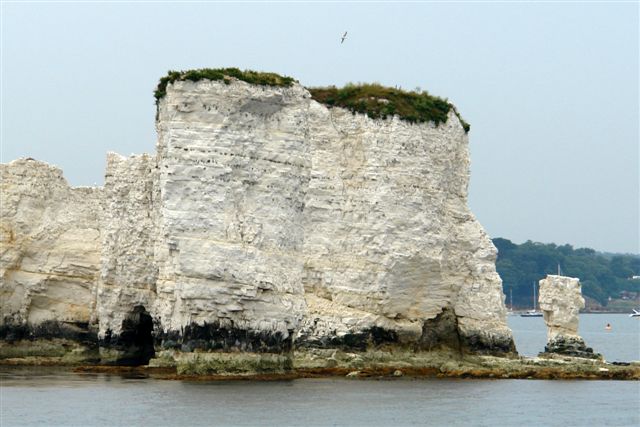
The rocks are caused by the erosion of waves, which attack the weak joints in the rock, forming arches and caves. Eventually they collapse leaving isolated stacks like 'Old harry'.
The rocks in this area are chalk from the Cretatious era of around 65 million years ago
Tuesday, September 12, 2006

Sunday, September 10, 2006
Durdle Door

The picture above is of a pathway I descended from a car park, just off the road that leads to Lulworth Cove, which is a mile or so from Durdle Door. At the edge of one the chalkstone cliffs at the end of the windy path I could see more chalkstone cliffs to the right and left

Looking out to sea and below the cliff edge I was stood on, at the foot of the long windy path is Durdle Door. It is a perfect coastal arch, carved out, by the erosive action of the sea
The rocks in this area are of chalk, from the Cretatious Period of approximately 65 million years ago

The picture above is of a pathway I descended from a car park, just off the road that leads to Lulworth Cove, which is a mile or so from Durdle Door. At the edge of one the chalkstone cliffs at the end of the windy path I could see more chalkstone cliffs to the right and left

Looking out to sea and below the cliff edge I was stood on, at the foot of the long windy path is Durdle Door. It is a perfect coastal arch, carved out, by the erosive action of the sea
The rocks in this area are of chalk, from the Cretatious Period of approximately 65 million years ago
Tuesday, September 05, 2006
Gateway Towns - Portland
Although the Jurassic coast is approximately 95 miles long, it is but a few yards wide, reaching up to the edges of the beachs, coastline and cliffs, therefore just a few yards wide in some locations. Bearing that in mind, there are a number of other features lying just beyond the boundary of the Jurassic coast. For example there are a number of what are named gateway towns lying just behind the boundary ... there are also castles and other buildings of historical importance. One such building is Portland castle, as shown below ...

Portland castle was built by Henry VIII in 1540. Forming part of his coastal defense system against invasion by the French. Positioned so close to the enemy across the narrow channel, he took no chances and built the castle walls fourteen feet thick
Although the Jurassic coast is approximately 95 miles long, it is but a few yards wide, reaching up to the edges of the beachs, coastline and cliffs, therefore just a few yards wide in some locations. Bearing that in mind, there are a number of other features lying just beyond the boundary of the Jurassic coast. For example there are a number of what are named gateway towns lying just behind the boundary ... there are also castles and other buildings of historical importance. One such building is Portland castle, as shown below ...
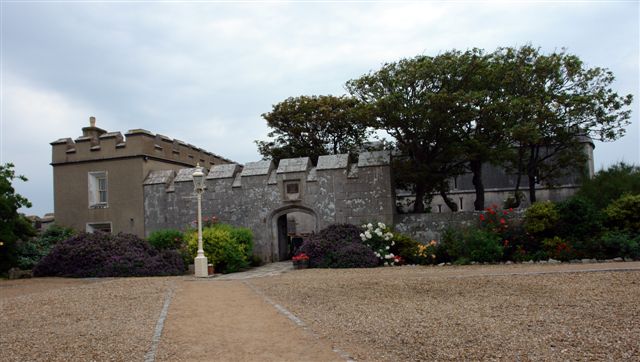
Portland castle was built by Henry VIII in 1540. Forming part of his coastal defense system against invasion by the French. Positioned so close to the enemy across the narrow channel, he took no chances and built the castle walls fourteen feet thick
Saturday, September 02, 2006
Brownsea Island
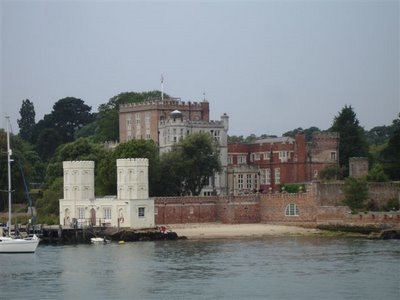
I saw Brownsea Island in the summer from a boat trip. The trip started from Poole Harbour in Dorset to Swanage, via Old Harry Rocks. It was a beautifull sunny day and just the time to see some of the Jurassic Coast at its best.
Brownsea Island is the largest Island within Poole Harbour. It is a former hill above river valleys from when sea levels were lower than they are today. It seperated to become an island during flooding from the Flandrian Trangression after the Pleistocene Ice Age ... and Poole Harbour was formed
The Pleistocene is the most well known of the Earth's Ice Ages. The ice sheets once covered all of Antartica, along with large areas of Europe, North and South America, and smaller areas of Asia. The glaciation of the Pleistocene consisted of several glacial advances followed by interglacial phases when the ice retreated and a relatively mild climate prevailed. Carbon-14 dating of fossils indicates that the last glacial period ended around 11,000 years ago
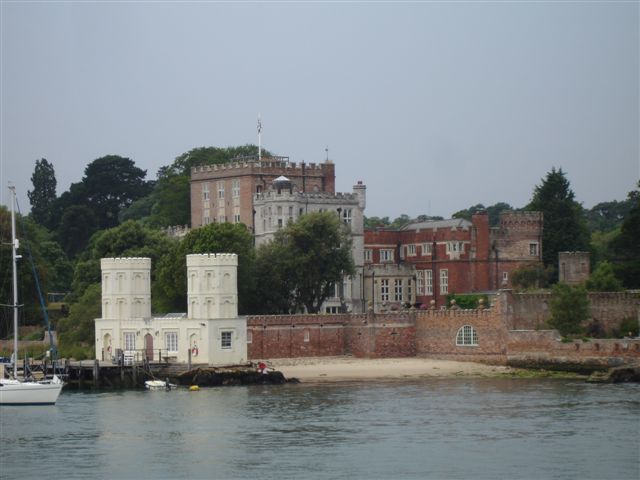
I saw Brownsea Island in the summer from a boat trip. The trip started from Poole Harbour in Dorset to Swanage, via Old Harry Rocks. It was a beautifull sunny day and just the time to see some of the Jurassic Coast at its best.
Brownsea Island is the largest Island within Poole Harbour. It is a former hill above river valleys from when sea levels were lower than they are today. It seperated to become an island during flooding from the Flandrian Trangression after the Pleistocene Ice Age ... and Poole Harbour was formed
The Pleistocene is the most well known of the Earth's Ice Ages. The ice sheets once covered all of Antartica, along with large areas of Europe, North and South America, and smaller areas of Asia. The glaciation of the Pleistocene consisted of several glacial advances followed by interglacial phases when the ice retreated and a relatively mild climate prevailed. Carbon-14 dating of fossils indicates that the last glacial period ended around 11,000 years ago
Thursday, August 24, 2006
Chesil Beach!

This is a beach that I visited in the summer, I did initially have great difficulty finding it, but once I did, I was were amazed. It is awesome, and appears to stretch for miles, which of course it doesnt, it actually stretches for 17 miles. This picture was taken from a hill overlooking the beach! The amazing thing about Chessil is that to get to the water you need to ascend a mound of pebbles and shingle, only to then descend the mound to get to the waters edge

The above picture is probably the more familiar scene, with the rock which is Portland clearly visible from the beach. Chessil is one of the largest barrier beaches in the world, consisting of pebbles and shingle that have withstood the fullforce of the Atlantic Ocean for thousands of years, The beach protects 'the fleet', which is the largest tidal lagoon in Britain

This is a beach that I visited in the summer, I did initially have great difficulty finding it, but once I did, I was were amazed. It is awesome, and appears to stretch for miles, which of course it doesnt, it actually stretches for 17 miles. This picture was taken from a hill overlooking the beach! The amazing thing about Chessil is that to get to the water you need to ascend a mound of pebbles and shingle, only to then descend the mound to get to the waters edge

The above picture is probably the more familiar scene, with the rock which is Portland clearly visible from the beach. Chessil is one of the largest barrier beaches in the world, consisting of pebbles and shingle that have withstood the fullforce of the Atlantic Ocean for thousands of years, The beach protects 'the fleet', which is the largest tidal lagoon in Britain
Subscribe to:
Posts (Atom)